Salt Therapy & the Ocean: What the Science Actually Tells Us
Halotherapy is one of the fastest-growing wellness modalities in the world — and it has deeper roots in ocean science than most people realize. Here is an honest, peer-reviewed look at what salt therapy is, what it can and cannot do, and how it connects to the healing power of blue space.
At Aquatic Therapy Hub, every resource we publish traces back to a simple standard: if a health claim cannot be supported by published, peer-reviewed research, we will not make it. Salt therapy — also called halotherapy — is no exception.
What makes salt therapy particularly compelling in the context of aquatic and ocean wellness is this: the ocean already produces a natural version of it. Every time a wave breaks, it releases microscopic salt particles and negatively charged air ions into the atmosphere. Coastal air has measurably different chemistry than inland air — and that difference has real, documented biological effects.
This guide explains what halotherapy is, what the current evidence actually supports, where the science is still developing, and how you can explore it — whether at a local salt cave, on a cruise ship, or in your own home.
The word halotherapy comes from the Greek halos, meaning salt. In its modern clinical form, halotherapy refers to the therapeutic inhalation of pharmaceutical-grade dry salt aerosol inside a controlled environment — most commonly a salt room or salt cave studio.
These rooms use a device called a halogenerator, which grinds pharmaceutical-grade sodium chloride (NaCl) into microscopic particles between 1 and 5 microns in size. At this scale, the particles are small enough to travel deep into the bronchial tree and airways. Sessions typically last 30 to 45 minutes, during which you sit quietly and breathe normally.
Halotherapy is distinct from — but related to — thalassotherapy, which is the therapeutic use of seawater, marine mud, and coastal climate in a broader range of applications. Both disciplines draw from the same foundational idea: salt-rich environments interact with the human body in measurable, beneficial ways.
Salt therapy is not a new concept. Physicians in 19th century Eastern Europe documented the unusually low rates of respiratory illness among salt mine workers — a clinical observation that became the foundation of modern speleotherapy (cave-based salt therapy). Today, salt rooms exist in over 30 countries, and the United States alone has more than 500 dedicated halotherapy studios.
What Is Salt Therapy (Halotherapy)?


The evidence base for halotherapy is real, growing, and nuanced. Below is an accurate summary of the current peer-reviewed literature — organized by how well-supported each benefit is. We distinguish clearly between what is well-established, what is promising but preliminary, and what remains speculative. This matters, because the wellness industry frequently overclaims. We will not do that here.
What Does the Peer-Reviewed Research Say?
A number of commercial halotherapy providers claim benefits for immune function, eczema, psoriasis, and a broad range of systemic conditions. While some of these are biologically plausible — sodium chloride has well-documented antimicrobial and anti-inflammatory properties — the clinical evidence for these specific outcomes from dry salt aerosol inhalation alone remains limited and largely observational.We do not make these claims. We present them here transparently so you can evaluate what you read elsewhere. As the research base matures — and it is growing rapidly — we will update this page accordingly.
Speculative: Immune Modulation, Skin Conditions & Broader Claims
The most consistently supported benefit of halotherapy in the clinical literature is its effect on mucociliary clearance — the process by which the airways move mucus, particles, and pathogens out of the respiratory tract. A 2022 narrative review by Barber et al., published in Alternative Therapies in Health & Medicine, found positive effects on FEV1 (forced expiratory volume — a standard measure of lung function) and mucociliary transport across multiple study populations. A 2020 randomized controlled trial by Freidl et al., published in the Journal of Clinical Medicine (doi: 10.3390/jcm9010133), found statistically significant reductions in airway inflammation markers when pelotherapy was combined with structured physical exercise in patients with chronic respiratory conditions, compared to a control group. A 2025 observational study by Gelardi et al. in the Monaldi Archives for Chest Disease — involving more than 4,000 participants — found that the majority of halotherapy users reported improvements in upper airway symptoms, with high overall satisfaction rates.
Well-Supported: Respiratory Mucociliary Function
The mood and stress-reduction effects of salt-rich air environments are biologically plausible and supported by related research — but the evidence specifically for halotherapy rooms as a mood intervention is still developing. The foundational mechanism here involves negative air ions (NAIs) — electrically charged particles produced when salt aerosol meets air. A landmark 2013 meta-analysis in BMC Psychiatry, authored by Perez, Alexander, and Bailey (PMID: 23320516), reviewed 33 controlled human studies published between 1957 and 2012. It found that high-density negative ionization was significantly associated with lower depression ratings — an effect the authors described as comparable in magnitude to non-pharmacological antidepressant interventions. The ocean is one of nature's richest sources of negative air ions, produced continuously by breaking waves. A dedicated salt room replicates this effect in concentrated form. We classify this benefit as promising because most halotherapy-specific studies have not yet isolated mood outcomes as a primary endpoint. The neurological mechanism is real and well-documented; its direct application to salt rooms specifically warrants further controlled research.
Promising but Preliminary: Mood, Stress & Neurological Effects
⚕ Medical Disclaimer
Halotherapy is a complementary wellness practice and is not a substitute for medical treatment. Consult your physician before use if you have a diagnosed respiratory condition (including asthma, COPD, or emphysema), cardiovascular disease, active infection or fever, or if you are pregnant. The information on this page is for educational purposes only.
SOURCES
Barber, P. et al. (2022). Halotherapy and its potential role in the management of chronic respiratory disease. Alternative Therapies in Health & Medicine.
Freidl, E.K. et al. (2020). Journal of Clinical Medicine, 9(1), 133. doi: 10.3390/jcm9010133
Gelardi, M. et al. (2025). Monaldi Archives for Chest Disease. n = 4,000+
SOURCES
Perez, V., Alexander, D.D., & Bailey, W.H. (2013). Air ions and mood outcomes: a review and meta-analysis. BMC Psychiatry, 13, 29. PMID: 23320516
Salt Therapy and the Ocean: The Blue Mind Connection
One of the most underappreciated facts about the ocean is that spending time near it is, in a very real sense, a form of passive halotherapy.
When ocean waves break against the shore or each other, they release microscopic salt particles and generate high concentrations of negative air ions — the same fundamental mechanism that a halogenerator replicates in a salt room. Research by marine biologist Dr. Wallace J. Nichols, presented in his widely cited 2014 book Blue Mind (Little, Brown and Company — 9,400+ academic citations), documents the measurable neurological and psychological effects of sustained ocean exposure, including cortisol reduction, improved mood, and enhanced cognitive clarity.
A 2021 systematic review published in MDPI's International Journal of Environmental Research and Public Health identified cortisol reduction as one of the primary physiological pathways through which coastal environments promote wellbeing.
The connection is direct: the ocean is a natural salt therapy environment. It surrounds you in salt-rich, ion-dense, rhythmically stimulating air — continuously, without a 30-minute session timer.
This is why cruise travel occupies a unique position in the wellness world. A 7 to 14 night ocean voyage is not a brief beach visit — it is continuous, sustained immersion in a blue space environment. For those interested in halotherapy, this matters: you are receiving a low-dose, continuous analog of salt therapy from the moment you board to the moment you disembark. Some cruise lines — including Celebrity Cruises and Viking Ocean — now offer dedicated salt rooms within their onboard spas, making daily concentrated halotherapy accessible at sea.
To explore which cruise lines offer salt rooms and how to book them, visit our sister resource: CruisingHacks.net — Salt Therapy at Sea Guide.

"Being near, in, on, or under water can make you calmer, healthier, happier — and the neuroscience is beginning to reveal why."
— Dr. Wallace J. Nichols, Marine Biologist & Author, Blue Mind (2014)



Types of Salt Therapy Experiences: What's Available to You
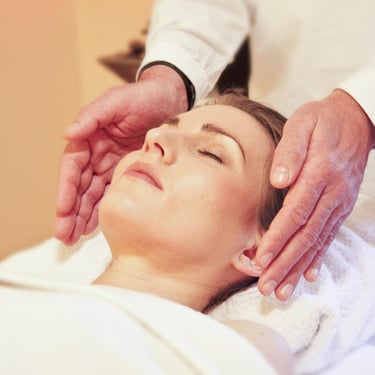
Salt therapy is not one-size-fits-all. Here are the main formats available — from clinical to at-home — and what each one offers.
🏛️ Salt Cave Studios & Halotherapy Centers
The gold standard for halotherapy. A purpose-built room with pharmaceutical-grade halo generators, salt-covered walls, and controlled temperature and humidity. Sessions run 30–45 minutes. Best for respiratory support and deep sensory relaxation.
Look for studios that use pharmaceutical-grade NaCl and can show you their halo generator make and model.
What to bring: Comfortable loose clothing. No perfumes or scented products — these interfere with the salt environment and affect other guests.
How to find one: Search Get Your Guide or Viator for "salt cave" or "halotherapy" in your area or near your cruise departure port.
Several cruise lines now feature dedicated salt rooms or salt inhalation therapy as part of their spa offerings. Celebrity Cruises' Edge-class ships (Celebrity Edge, Apex, Beyond, and Ascent) include a dedicated salt room within the SEA Thermal Suite. Guests booked in AquaClass staterooms receive complimentary access — making it the only standard cruise booking category that includes daily halotherapy at no additional cost.
Viking Ocean's LivNordic Spa offers salt inhalation therapy as part of its Nordic wellness circuit across all ocean ships.
For a full comparison of cruise lines offering salt therapy at sea, visit CruisingHacks.net.
🚢 Onboard Cruise Ship Salt Rooms
Viking Venus is Perfect for Older Travelers
Sail away to Alaska in the Viking Venus, the ultimate cruise experience for adult travelers seeking enrichment, relaxation, and refined sophistication. This 930-passenger, adults-only vessel offers an elegant atmosphere with cozy bars, stylish lounges, steam rooms, and the serene LivNordic Spa. Guests can unwind in two outdoor pools or retreat to your staterooms.
At-home salt therapy tools vary significantly in how closely they replicate clinical halotherapy conditions. Here is an honest breakdown, ordered from most to least evidence-aligned:
🏠 At-Home Salt Therapy Options
CITE
Wasik AA, Tuuminen T. Salt Therapy as a Complementary Method for the Treatment of Respiratory Tract Diseases, With a Focus on Mold-Related Illness. Altern Ther Health Med. 2021 Oct;27(S1):223-239. PMID: 34726628.
Ceramic Salt Inhalers ($15–$35) A pipe-style device packed with pharmaceutical-grade Himalayan salt. You breathe slowly through the mouthpiece for 15–20 minutes per session. This format provides passive inhalation at a low concentration. The evidence for this specific device is limited, but the underlying mechanism — salt particle inhalation — aligns with the respiratory pathway documented in Barber et al. (2022). Always look for devices that use food-grade or pharmaceutical-grade NaCl, not decorative or colored salts.
Himalayan Salt Lamps ($30–$70): Warm, ambient wellness accessories. We want to be honest here: the evidence for meaningful negative ion production from salt lamps is weak at clinically relevant levels. Their ion output is far lower than a halo generator or an ocean environment. We recommend them as calming, atmospheric additions to a wellness space — not as primary halotherapy devices. The warm amber light and salt aesthetic do support a Blue Mind-aligned sensory environment.
"CITE
Meneguzzo, Francesco, Lorenzo Albanese, Michele Antonelli, Rita Baraldi, Francesco Riccardo Becheri, Francesco Centritto, Davide Donelli, Franco Finelli, Fabio Firenzuoli, Giovanni Margheritini, and et al. 2021. "Short-Term Effects of Forest Therapy on Mood States: A Pilot Study" International Journal of Environmental Research and Public Health 18, no. 18: 9509. https://doi.org/10.3390/ijerph18189509
Personal Halo generators ($200–$1,200) The closest home replication of a clinical salt room available on the market today. These devices grind pharmaceutical-grade salt into microscopic 1–5-micron particles and disperse them into a small, enclosed space — such as a bathroom with the door closed. This format most closely matches the conditions studied in Freidl et al. (2020) and Barber et al. (2022). If you are serious about consistent at-home halotherapy, this is the most scientifically aligned option. Consult your physician before use if you have any diagnosed respiratory condition.
Salt Mineral Bath Soaks ($20–$60): Dead Sea mineral salts and magnesium-rich bath blends support the thalassotherapy tradition of transdermal mineral absorption. While distinct from inhalation-based halotherapy, a 2024 narrative review by Antonelli & Donelli in the International Journal of Biometeorology supports the use of seawater mineral environments for skin and inflammatory conditions. These make an excellent complement to an inhalation practice — particularly for those interested in a full ocean-mineral wellness routine at home.
⚕ Safety Note: Always use pharmaceutical-grade or food-grade sodium chloride in any inhalation device. Never use decorative, colored, or scented salts for breathing purposes. If you have a respiratory condition, consult your physician before beginning any at-home inhalation practice.
Whether you are visiting a local salt cave studio, using an onboard cruise ship salt room, or beginning a home practice, the core experience is consistent. Here is exactly what to expect — step by step.
What to Expect: Your First Halotherapy Session
─────────────────────────────────────
Step 1 — Before Your Session
Arrive without perfume, scented lotion, or strongly scented hair products.
Fragrances disrupt the salt environment and can affect other guests in a shared studio setting. Wear loose, comfortable clothing — you will be sitting or reclining for 30 to 45 minutes. Bring a water bottle for after your session. If you have a respiratory condition and carry a prescription inhaler, bring it with you but plan to use it only if necessary.
─────────────────────────────────────
Step 2 — The Room Environment
A properly equipped halotherapy room maintains a temperature between 68°F and 75°F (20–24°C) and relative humidity between 40% and 60%. The halo generator runs continuously, dispersing pharmaceutical-grade salt particles throughout the session. Salt-covered walls and floors are a common design feature, but the primary therapeutic mechanism is the dispersed aerosol — not the walls themselves.
─────────────────────────────────────
Step 3 — During Your Session (30–45 Minutes)
Sit or recline comfortably and breathe normally. Do not force deep breaths or hyperventilate — the particles are designed to work at your natural, relaxed respiratory rate. Many people pair their session with quiet meditation, gentle breathwork, or simple rest. Most studios provide zero-gravity chairs or reclining loungers. Cruise ship salt rooms often include ambient ocean sounds, reinforcing the Blue Mind environment.
─────────────────────────────────────
Step 4 — What You May Notice
Some first-time users experience a mild cough or a temporary increase in mucus during or shortly after their session. This is a normal physiological response as the airways begin the mucociliary clearing process — the mechanism documented in Barber et al. (2022). It typically subsides within an hour. If you experience chest tightness, wheezing, or difficulty breathing at any point during a session, leave the room immediately and seek assistance.
─────────────────────────────────────
Step 5 — After Your Session
Drink water. Allow yourself 10 to 15 minutes of quiet rest before returning to full activity. Some people notice an immediate sense of lightness or respiratory clarity; others find that benefits accumulate over multiple sessions. Research suggests that consistent, repeated exposure produces more reliable outcomes than a single visit.
─────────────────────────────────────
Step 6 — Frequency and Consistency
Barber et al. (2022) noted that the most consistent outcomes across reviewed studies involved regular, repeated sessions rather than one-off experiences. Most halotherapy studios recommend an initial series of 10 to 20 sessions over several weeks. For cruise travelers, using the onboard salt room daily throughout a 7-to-14-night sailing replicates this kind of sustained, consistent exposure — and is one of the quietly underappreciated wellnesses advantages of extended ocean travel.
Salt Therapy — Frequently Asked Questions
Is salt therapy the same as spending time at the beach?
Related — but not identical. Ocean air contains naturally occurring salt particles and negative ions produced continuously by breaking waves, which is the same fundamental mechanism as halotherapy at a much lower concentration and without precise particle sizing. A dedicated salt room concentrates this effect dramatically using pharmaceutical-grade sodium chloride ground to 1–5-micron particles by a halo generator. Think of ocean air as a continuous, low-dose background exposure and a salt room as a concentrated, structured session. Both work through the same pathway — at very different intensities.
How many sessions does it take to notice a difference?
The peer-reviewed studies that showed the most consistent results involved repeated sessions rather than single visits. Barber et al. (2022) noted cumulative effects across study populations using regular halotherapy protocols. Most dedicated studios recommend an initial series of 10 to 20 sessions. For cruise travelers, this is a meaningful insight: using the onboard salt room daily across a 7 to 14 night sailing creates exactly the kind of consistent, repeated exposure that the literature associates with better outcomes — making extended cruise travel one of the most practical ways to complete an initial halotherapy series without building it into a separate routine.
How is halotherapy different from thalassotherapy?
These two therapeutic traditions are related but distinct. Halotherapy focuses specifically on the inhalation of dry pharmaceutical-grade salt aerosol in a controlled room environment. Thalassotherapy is a broader discipline involving the therapeutic use of seawater, marine mud, algae, and coastal climate across a range of applications — pools, hydrotherapy jets, body wraps, and mineral immersion baths. Both have peer-reviewed evidence supporting their use. Both are available on cruise ships: Celebrity Cruises and Viking Ocean offer dedicated halotherapy rooms, while Seabourn, Silversea, and others offer thalassotherapy-based spa treatments. They are complementary modalities, not interchangeable ones.
Are Himalayan salt lamps actually therapeutic?
Honestly — the clinical evidence for salt lamps as halotherapy devices is weak. Their negative ion output is significantly lower than a halo generator or ocean environment, and no peer-reviewed randomized controlled trials support them as respiratory or mood interventions at the concentrations they produce. That said, the warm amber light they emit creates a genuinely calming sensory environment aligned with Blue Mind principles of low-stimulation restoration. We recommend them as wellness accessories and ambient tools — not as substitutes for clinical halotherapy.
Can I use salt therapy if I have asthma?
This requires a direct conversation with your pulmonologist — not a blog article. The research is cautiously encouraging: Freidl et al. (2020) found positive outcomes in a controlled RCT setting involving patients with chronic respiratory conditions, and mucociliary clearance benefits are documented in the literature. However, asthma involves airway hypersensitivity, and individual responses vary considerably. Do not use halotherapy during an active asthma episode. Never reduce or stop prescribed inhaler medication based on halotherapy practice. Always bring your rescue inhaler to any session. If your physician clears you to try it, start conservatively with a shorter session of 15 to 20 minutes and monitor your response carefully.
.
Is salt therapy safe for children?
Many salt cave studios offer family sessions and market halotherapy to children, particularly for recurring upper respiratory concerns. Some pediatric studies have shown positive outcomes for children with frequent respiratory infections. However, as with any complementary therapy for children, consult your pediatrician before proceeding. This page is written for an adult wellness audience, and we do not make specific recommendations for pediatric use without direct clinical guidance.
Connect
Feel free to reach out anytime
The Aquatic Therapy Hub© 2026. All rights reserved.
Navigation