What Is Blue Mind Theory? The Science Behind Ocean Healing
what is blue mind theory? Have you ever felt an undeniable sense of calm and peace while gazing at the ocean, listening to the rhythmic crash of waves, or simply being near a body of water?
BLUE MIND THEORY & OCEAN WELLNESS
Leeanna Robbins
5/16/20264 min read
What is Blue Mind Theory?
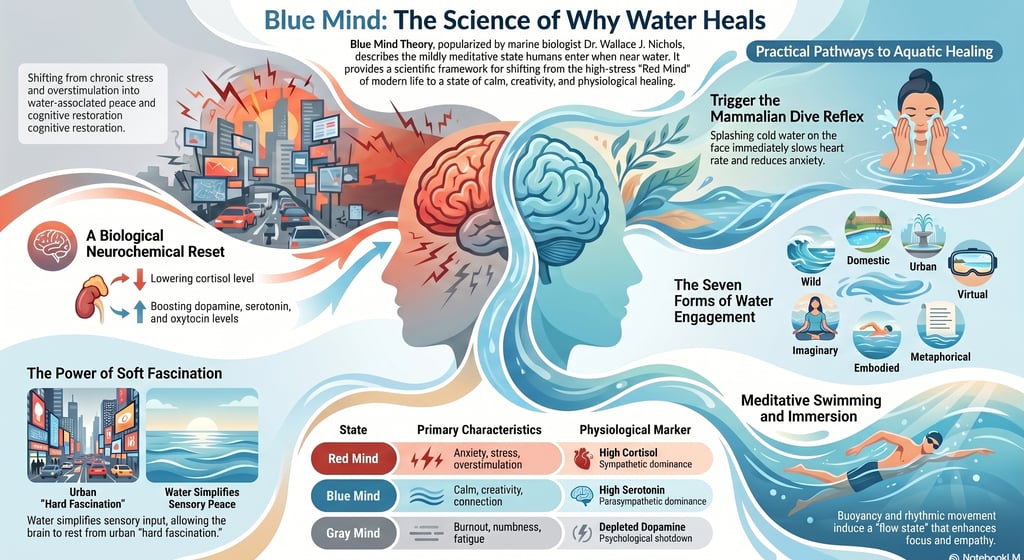
Have you ever felt an undeniable sense of calm and peace while gazing at the ocean, listening to the rhythmic crash of waves, or simply being near a body of water? This profound connection to aquatic environments is not merely anecdotal; it's a phenomenon explored by Blue Mind Theory. Coined by marine biologist Dr. Wallace J. Nichols, Blue Mind Theory posits that being in, on, or under water can induce a mildly meditative state, fostering feelings of calm, peace, unity, and general happiness . This concept stands in stark contrast to what Nichols refers to as "Red Mind," a state characterized by stress, anxiety, fear, and even despair, often brought on by the demands of modern life .
Dr. Nichols' groundbreaking work, particularly his national bestselling book Blue Mind, has brought this theory to the forefront, blending scientific research with personal observations to illuminate the profound impact water has on our mental and physical well-being .
The Science Behind Blue Mind
The positive effects of water on the human psyche are deeply rooted in neuroscience and evolutionary biology. Our brains respond uniquely to aquatic environments, leading to a cascade of beneficial physiological and psychological changes.
Neurologically, the presence of water can shift our brains into a mildly meditative state. This is partly due to the predictable yet dynamic nature of water. Unlike the chaotic stimuli of a busy urban environment, a body of water offers a largely consistent background. This predictability allows the brain's emotional centers to relax. When changes occur, such as a breaking wave or the sight of marine life, they introduce a sense of novelty, triggering a release of dopamine, a neurotransmitter associated with pleasure and reward.
The impact on stress and anxiety is significant. Research indicates that exposure to water helps balance the sympathetic and parasympathetic nervous systems. The sympathetic system is responsible for our increasingly stress-filled world. The visual and auditory stimuli of water—the gentle lapping of waves, the vastness of the ocean—can act as a natural antidote to the pressures of daily life.
Enhanced Creativity and Focus: Beyond calming the mind, water environments can also stimulate cognitive functions. The mildly meditative state induced by water can clear mental clutter, allowing for greater clarity of thought and boosting creativity. This is why many artists, writers, and thinkers have historically sought inspiration near water.
Physical Health Impacts: The benefits aren't solely psychological. Engaging with water has been linked to improved physical health outcomes. For instance, the hydrostatic pressure of water can have a soothing effect on the body, and water-based activities promote physical fitness. Studies have shown that regular engagement with water can positively influence cardiovascular, immune, digestive, and musculoskeletal systems, and even help regulate serotonin and dopamine levels, which are vital for mood regulation .
Therapeutic Applications: The therapeutic potential of Blue Mind is particularly significant for individuals facing specific challenges. For example, water activities can provide a safe and consistent environment for individuals with Autism Spectrum Condition, helping to regulate sensory input. Ocean therapy programs are also emerging as valuable tools for addressing PTSD, anxiety, and other mental health conditions, offering a unique blend of physical activity and psychological solace .
How to Cultivate Your Blue Mind
Even Without an Ocean Nearby
You don't need to live by the coast to experience the benefits of Blue Mind. Dr. Nichols identifies seven forms of Blue Mind, offering diverse ways to connect with water, no matter your location:
By understanding these various forms, individuals can create a personalized "Bluescription" to integrate water into their daily lives, adapting to their preferences, skills, and needs throughout different life stages.
Real-World Examples and Destinations
The growing recognition of Blue Mind Theory has led to the development of numerous water-centric wellness experiences worldwide. From luxury resorts offering river baths and hydrotherapy circuits to adaptive surfing programs and whale-watching excursions, the travel and wellness industries are increasingly embracing the healing power of water.
For instance, destinations like Hacienda Alta Gracia in Costa Rica offer immersive wellness experiences centered around water, including tranquil pools and riverside meditation. Similarly, privately chartered gulets in Croatia provide an unparalleled opportunity to live surrounded by the sea, fostering a constant state of Blue Mind. Even in remote locations like Antarctica, the vastness of the ocean and the serene beauty of ice-dotted waters can induce a profound sense of calm and reflection.
Conclusion: Dive into a Healthier, Happier You
The Blue Mind Theory offers a compelling scientific explanation for our innate attraction to water and its profound benefits for our well-being. From reducing stress and anxiety to boosting creativity and improving physical health, the evidence is clear: connecting with water is a powerful pathway to a healthier, happier life.
Whether you seek the vastness of the ocean, the tranquility of a lake, the simplicity of a warm bath, or even a virtual escape, embracing your Blue Mind can provide a much-needed refuge from the demands of modern existence. So, take a moment to reflect on your relationship with water, and consider how you can dive deeper into its healing embrace.
References
[1] Healing Waves Ocean Therapy. "The Blue Mind Phenomenon."
[2] I Am Lost and Found. "Blue Mind Theory: The Science Behind Why You Feel Better at the Beach."
[3] Marine Sanctuary Foundation. "Mental Health Awareness Month: The Benefits of a “Blue Mind”."
[4] Villa Resorts. "Blue Mind Theory: The Healing Power of Water."
Wild Blue Mind:
This encompasses natural bodies of water like lakes, rivers, rain, waterfalls, ponds, ice, and snow. Spending time in these natural settings allows for direct engagement with water in its purest form.Write your text here...
Domestic Blue Mind:
This refers to water experiences within our homes, such as pools, bathtubs, showers, and even sprinklers. A warm bath or a refreshing shower can be a simple yet effective way to de-stress.
Urban Blue Mind
Public waterfronts and fountains in towns and cities offer opportunities to connect with water in an urban setting. These can provide moments of tranquility amidst the hustle and bustle.
Virtual Blue Mind:
Artworks, photography, films, sculptures, prose, poetry, music, and recordings of water, or even virtual reality experiences, can evoke the feelings of being near water, even when it's not physically present.
Imaginary Blue Mind
This taps into our memories and nostalgia for water. Simply recalling a peaceful moment by the sea or a refreshing swim can conjure similar calming effects.
Embodied Blue Mind:
Recognizing that our bodies are largely composed of water, and that all life on Earth depends on it, fosters a deeper connection to this essential element.
Metaphorical Blue Mind:
Water is a rich source of metaphors in language, and these verbal cues can subtly influence our sense of well-being and connection to water
Connect
Feel free to reach out anytime
The Aquatic Therapy Hub© 2026. All rights reserved.
Navigation